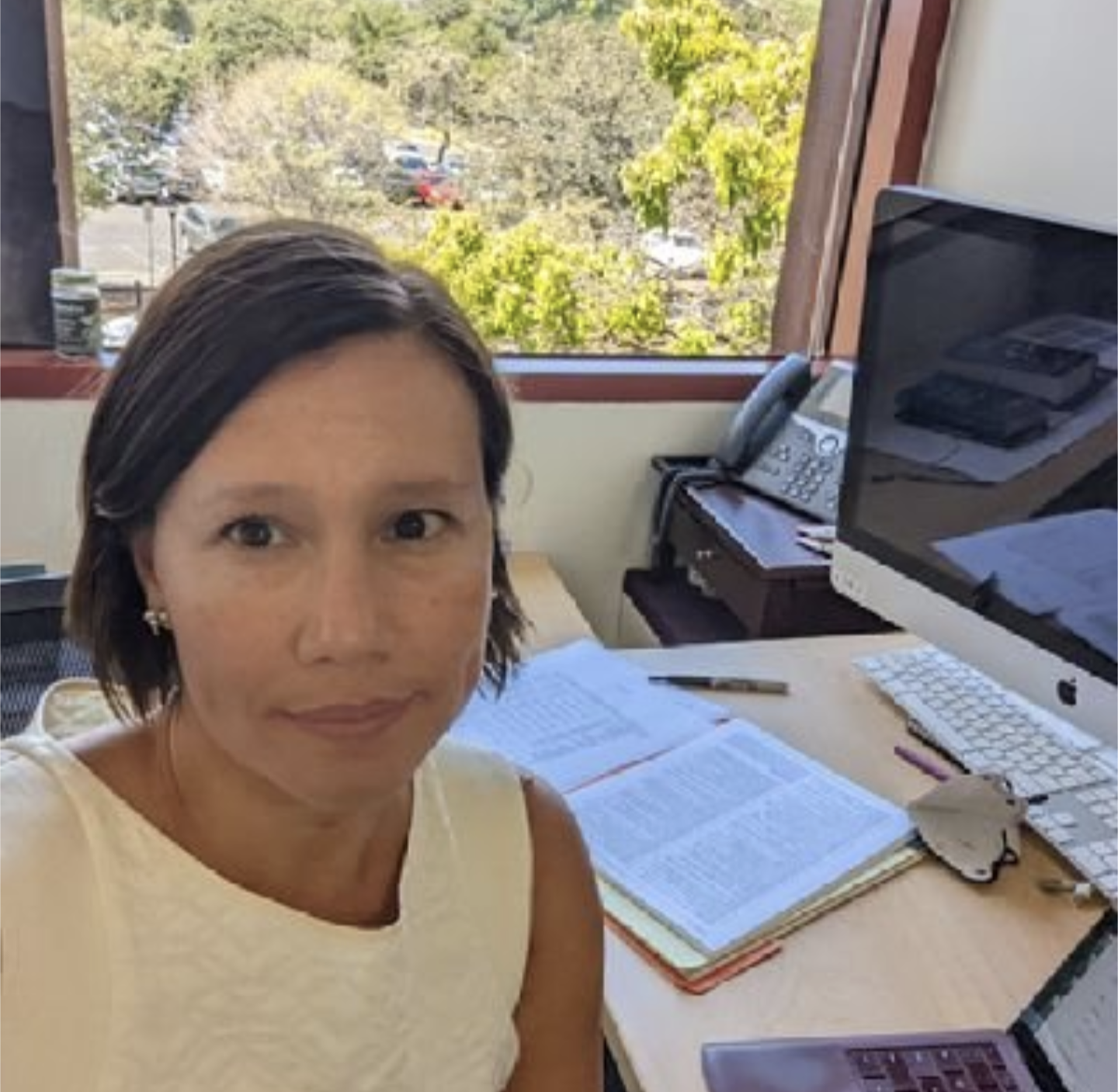
Assistant Professor
Stanford University
Department of Medicine
Division of Immunology & Rheumatology
Contact: prefix@suffix where prefix=stamang and suffix=stanford.edu
Twitter: Follow @suzannetee
Other Affiliations:
- Department of Veterans Affairs
Suzanne Tamang, PhD, is an Assistant Professor of Medicine (Immunology & Rheumatology) and the Director of the Tamang Lab at Stanford University. Her research has pioneered the development of next generation tools that pair artificial intelligence and statistical machine learning methods to distill information from large and “noisy” observational health datasets and provide reliable inferences for precision population health and personalized care decisions. Dr. Tamang’s work spans classical AI approaches such as expert systems and ontologies to more modern deep learning and transformer-based methods. A central theme to her work is the integration of functional status information. She has written over 60 peer-reviewed papers in the field of biomedical informatics and is a sought-after speaker by organizations such as AcademyHealth, VA, DoD, NAM, AHRQ and FDA. Dr. Tamang is also an active developer of open-source software tools that are available to the research community, licenses predictive models she developed to commercial vendors, serves as an advisor to multiple companies and her work has been funded by leading organizations including the NIH, VA and NSF.
Prior to joining Stanford, Dr. Tamang did her PhD in Computer Science at City University of New York’s Graduate Center, where she was elected by the student body as the President of Student Affairs and delivered the 2014 Commencement Address at Lincoln Center. Before pursuing a PhD in Computer Science Dr. Tamang worked for five years at Metropolitan Jewish Health System (MJHS), an integrated delivery system in the New York Metropolitan Area. Her work at MJHS’s Department of Research led to her interest in healthcare policy and her first publication. It also allowed Dr. Tamang to access the patient data used in her Master’s Thesis, which compared different palliative care information systems, including a case-based reasoning system (a classical AI approach) developed by Dr. Tamang.
At the end of 2021, Dr. Tamang joined the Department of Veterans Affairs, where she serves as the Computation Systems Evaluation Lead for Office of Mental Health. Since 2021, her team has pioneered the use of AI and cloud-based technologies for mental health operations. In collaboration with the Office of Information Technology partners, Dr. Tamang deployed the VA’s first national-level NLP pipeline that updates the VA’s Corporate Data Warehouse with new NLP artifacts, based on clinical progress notes from the previous day. Her team also contributes to continued innovation of the VA’s STORM (overdose prevention) and REACHVET (suicide prevention) program predictive models to support the care of the VA’s highest risk patients — at over 150 Medical Centers and thousands of outpatient facilities, across the United States. Dr. Tamang also sit on advisory boards of several organizations focused on innovative uses of AI or analytics to bring significant societal benefit and is the Faculty Mentor for the Stanford community working group, Stats for Social Good.
Students & Advanced Trainees
I get a very high volume of emails from students so I cannot respond to each one individually. If you haven’t heard from me, please don’t assume it to mean lack of interest.
- Undergrads: excited to share that I will be teaching “AI for Human & Planetary Health” in Winter 2025! This is a special seminar for Freshman and Sophomores that will be capped at 25 students.
- PhD applicants: if you’re interested in working with me, please apply to your Stanford program and call me out as a potential advisor explaining why.
- Postdoc applicants: I have no open positions. However, if you have experience in machine and deep learning and in interest in population health or environmental health, let’s talk! Please send me a note with your CV explaining why you’d like to work with me.
 srt
srt 